Late 2027 timeline for Optimus deliveries
Tesla is still working through major issues with the robot's hands, durability and AI.
By Jayden Sweiler ·
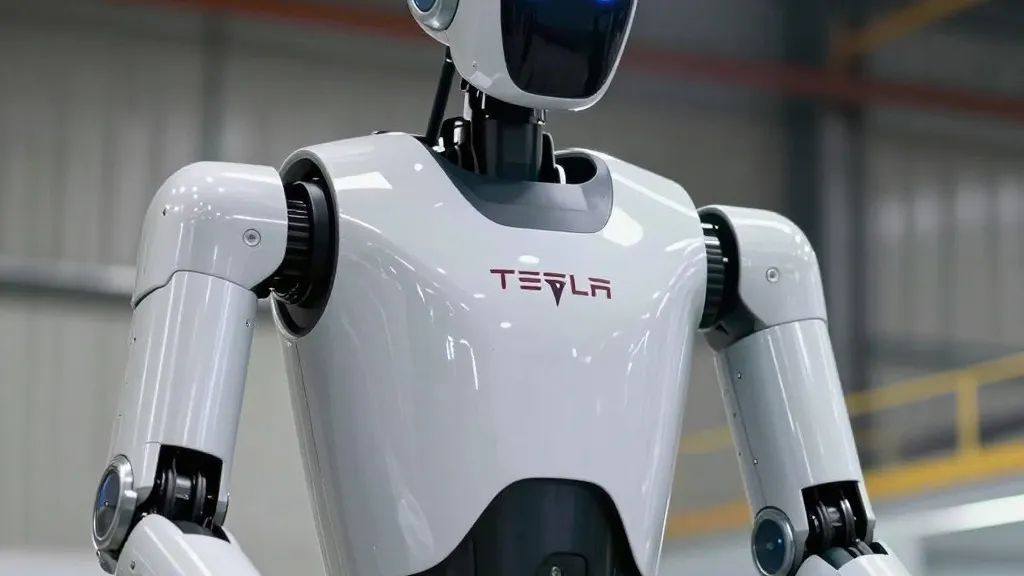
Late 2027 is now the target for external Optimus deliveries, according to Elon Musk. This follows a delay of several years, as the company continues to refine the robot's hands, which are essential for handling delicate objects while surviving constant wear. The robot's durability and AI are also still under development, with the goal of solving these issues around the end of 2027.
Tesla has started early production of Optimus on its high-volume line in Fremont, where Model S and Model X used to be built. Most of the line is already installed, but it will take at least a year, possibly longer, to reach a rate of about 20,000 units a week. This is because parts of the design are still changing.
The hands, the robot’s durability and its AI are the three main problems every humanoid robot company is fighting. Despite Musk’s claim that nobody is close to Tesla, XPeng and Hyundai’s Boston Dynamics look at least as far along.
Musk said on the call that, to the best of his knowledge, “there is no one that is even close to Tesla” on a general-purpose humanoid robot. That’s hard to square with what competitors have shown.
XPeng turned on an automated IRON production line in Guangzhou in September, with more than 80% of core processes automated. IRON has 21 degrees of freedom in each hand and runs XPeng’s physical AI model on three in-house Turing chips. XPeng plans mass production by the end of 2026, deliveries in the first half of 2027 starting with stores and malls, and a European rollout in the second half of 2027. That’s a similar timeline to Tesla’s, if not slightly ahead.
Boston Dynamics started producing its electric Atlas in January and says all of its 2026 Atlas deployments are already committed, including to Google DeepMind, whose AI models Boston Dynamics is integrating. In September, it opened a robot training center at Hyundai’s Metaplant in Georgia, where Atlas is learning to sequence car parts for the assembly line. Hyundai plans to deploy 25,000 robots across its plants over the next few years. Boston Dynamics also hired Milan Kovac, Tesla’s former head of Optimus, in January.
Boston Dynamics also seems to have taken a more pragmatic approach to hands, prioritizing sturdy grippers for industrial parts over human-like dexterity. That’s less impressive in a demo, but it’s a way around the problem Tesla says is holding it back.
Electrek’s Take Anyone shocked? Top comment by Paul Topping My prediction is that Optimus will forever be delayed. It's like FSD in Tesla cars, never quite good enough to really take off and always one or two releases away from fixing everything. At least a Tesla car with a broken FSD is still a good car. Optimus with a bad brain is an interesting-looking boat anchor.
Tesla may well have the most robots built, but building robots isn’t the hard part. Making them useful is.
As AI and robotics put more pressure on the grid and electricity rates climb, solar and batteries are becoming essential home infrastructure, not a luxury. With electricity rates up almost 10% last year and expected to keep climbing, going solar is one of the best ways to protect yourself against rising costs. And with lease and PPA options, you can do it with zero upfront cost and start saving immediately. If you want to find the best deal, check out EnergySage. It’s a free service with hundreds of pre-vetted installers competing for your business, so you save 20 to 30% compared to going it alone. No sales calls until you pick an installer. Get your free quotes here.
Source: Electrek